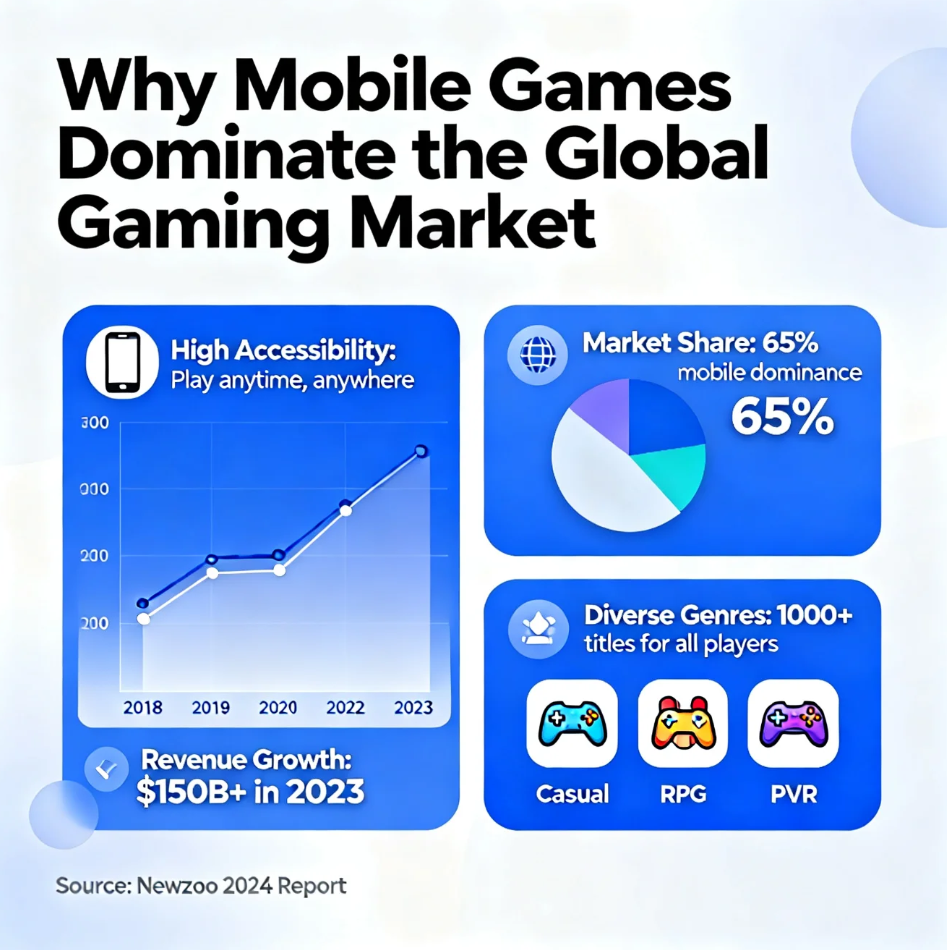
Mobile gaming has reshaped the entertainment industry, becoming the largest segment of the global gaming market. From casual puzzle games to competitive multiplayer titles, mobile games generate billions in revenue annually, outpacing console and PC gaming in user engagement and market penetration.
The reasons behind this dominance go beyond convenience—they reflect evolving technology, player behavior, and innovative business models.
Accessibility and Reach
One of the biggest drivers of mobile gaming dominance is unmatched accessibility:
- Smartphones are ubiquitous, with billions of users worldwide
- Low-cost or free-to-play models remove entry barriers
- Games are instantly playable without additional hardware
This accessibility ensures mobile gaming reaches diverse demographics, from casual players to gaming enthusiasts.
Engaging Gameplay and Retention
Mobile games are designed for high engagement and repeat play. Developers use:
- Short, addictive gameplay sessions
- Daily rewards and progression systems
- Social integration and leaderboards
These strategies boost retention, encouraging players to return frequently, which translates to higher lifetime value.
Monetization and In-App Purchases
Revenue generation in mobile games relies heavily on in-app purchases (IAPs) and microtransactions:
- Cosmetic items, power-ups, and premium content
- Dynamic pricing and subscription models
- Occasional ad-based revenue
This model converts free downloads into significant, recurring revenue streams, making mobile gaming highly profitable.
Free-to-Play and Virality
The free-to-play model allows games to attract millions quickly:
- Users try the game without upfront cost
- Viral sharing and social integration increase downloads
- Engaging content encourages in-game spending
By combining accessibility with social virality, mobile games capture massive, global audiences.
Technological Advancements
Advancements in mobile technology enhance gameplay experiences:
- Improved graphics and processing power
- AR/VR integration for immersive experiences
- Cloud gaming enabling console-level play on smartphones
Innovation keeps mobile gaming competitive and appealing, widening its reach in the global market.
Casual Gaming & Expanding Demographics
Mobile gaming thrives among non-traditional gamers:
- Hyper-casual and puzzle games attract all ages
- Short session lengths fit daily routines
- Social and collaborative elements broaden appeal
This inclusivity expands the market beyond traditional gaming audiences.
Global Market Trends
- Asia-Pacific dominates in revenue, driven by mobile-first users
- North America & Europe focus on premium spending and subscriptions
- Emerging markets are rapidly growing due to affordable devices and mobile internet
Mobile gaming’s flexibility and scalability allow it to adapt to different regions and player behaviors, reinforcing its global dominance.
Final Thoughts
Mobile games dominate the global gaming market because of accessibility, engagement, innovative monetization, and technological evolution. They reach billions worldwide, retain players through thoughtful design, and generate massive revenue streams.
In short, mobile gaming has not only captured the market—it defines the future of interactive entertainment.