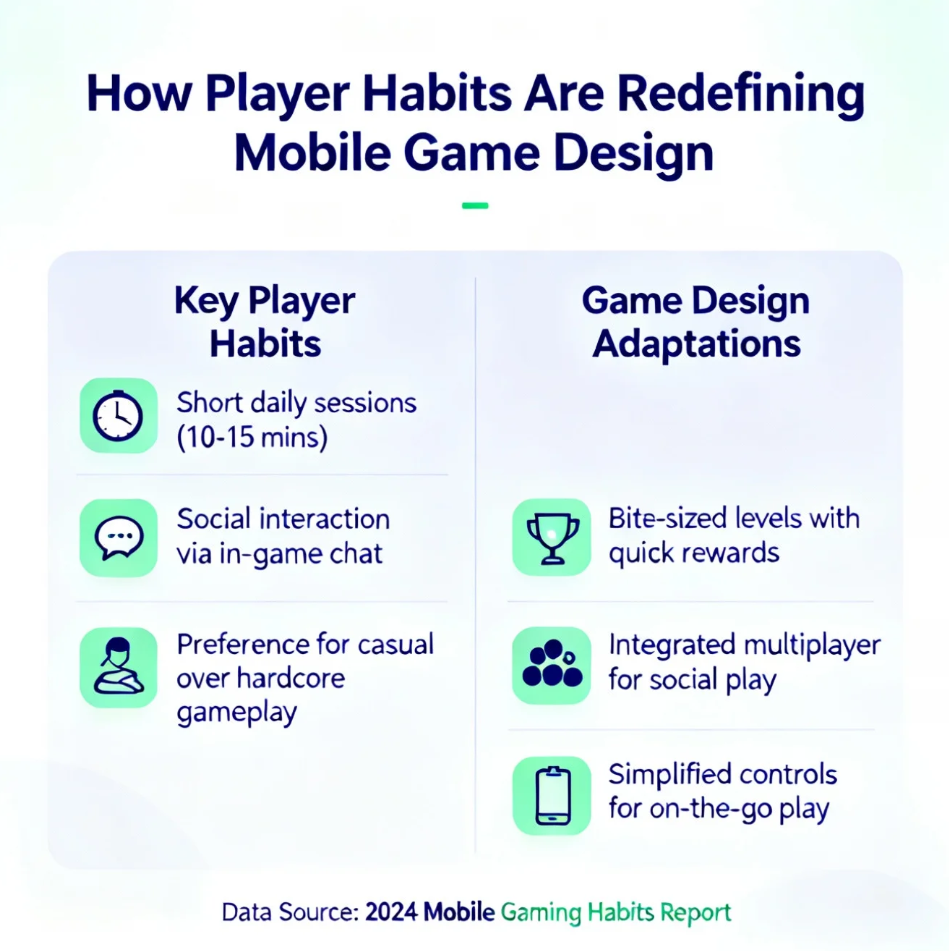
The mobile gaming landscape is changing faster than ever. Developers no longer design games based solely on technical possibilities—they must follow player habits, which now dictate how games are built, monetized, and experienced.
From session duration to social behavior, understanding player patterns has become central to creating engaging, profitable mobile games.
📱 1. Session Length and Casual Play
One of the most influential factors in mobile game design is how players engage in short bursts:
- Many players prefer 5–10 minute sessions over extended play
- Games are now designed with quick loops and rewarding milestones
- Daily challenges and micro-goals keep engagement high
Designing around these habits ensures players return regularly without feeling fatigued.
💰 2. Monetization Adapted to Player Behavior
Player spending habits heavily influence monetization strategies:
- Free-to-play models with microtransactions dominate
- Cosmetic items and limited-time offers match purchasing patterns
- Reward systems are tailored to encourage repeat engagement without frustration
By analyzing player habits, developers can strike a balance between profitability and user satisfaction.
🎨 3. UI/UX Designed for Habitual Interaction
User interface and experience design now mirrors how players naturally navigate:
- Intuitive controls optimized for one-handed use
- Visual cues and notifications aligned with player routines
- In-game tutorials that adapt to skill levels and prior behavior
Effective UI/UX design reduces friction and reinforces habits that encourage retention.
🌐 4. Social and Community-Driven Features
Social behavior increasingly shapes game design:
- Guilds, friend leaderboards, and co-op play respond to social habits
- Sharing achievements and content boosts engagement and virality
- Social loops are integrated seamlessly without interrupting gameplay
Games that respect social habits see longer lifespans and higher monetization potential.
🔄 5. Data-Driven Iteration
Mobile game developers now iterate based on real-world player habits:
- Telemetry tracks time spent, session frequency, and in-game choices
- A/B testing refines reward systems, difficulty curves, and monetization
- Analytics informs updates that align with evolving player preferences
This constant feedback loop ensures games remain relevant and engaging.
🔮 Final Thoughts: Designing Around Habits
Player habits are no longer just insights—they’re design imperatives. Modern mobile games succeed by shaping experiences around how people play, socialize, and spend.
Developers who embrace these patterns create games that feel natural, rewarding, and addictive in a positive way, ensuring longevity in a hyper-competitive market.