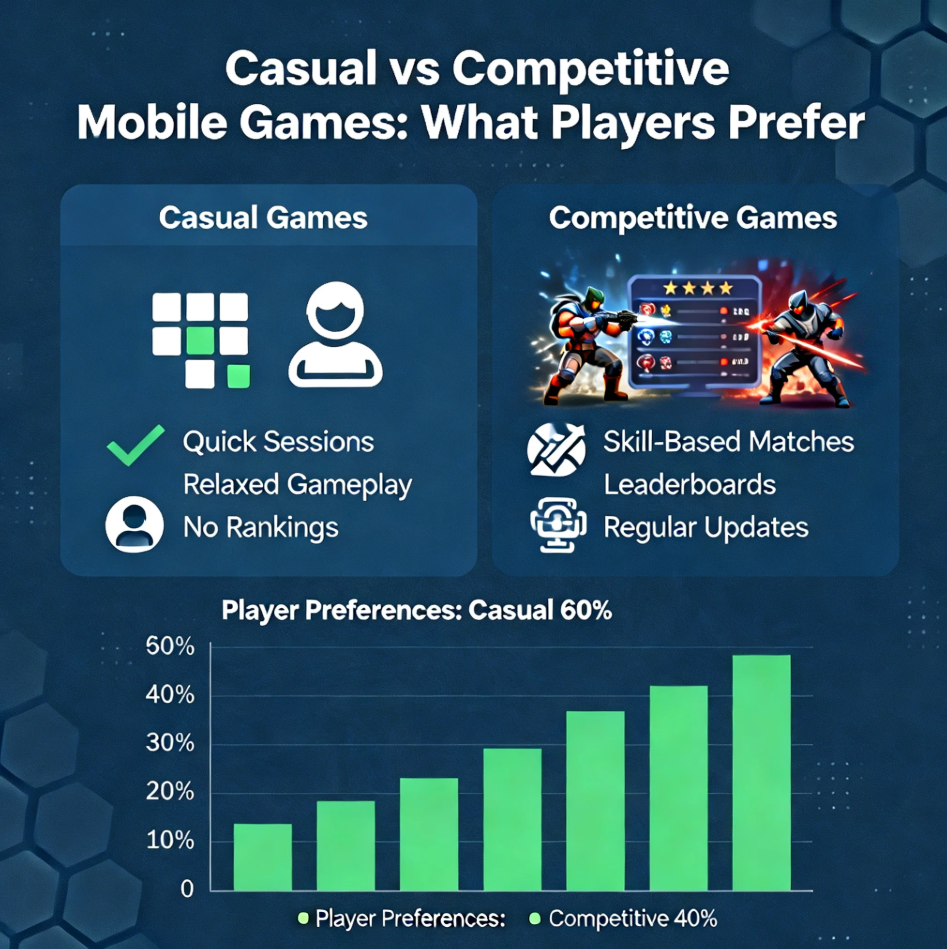
Mobile gaming has evolved into a diverse ecosystem where players can choose experiences ranging from relaxing casual games to intense competitive challenges. Understanding mobile gaming preferences sheds light on what drives engagement, satisfaction, and long-term player retention.
This article compares casual and competitive mobile games and explores the factors influencing player choice.
Casual Mobile Games
Casual games are designed for relaxation, short play sessions, and accessibility.
Key Characteristics:
- Easy-to-learn mechanics
- Short, satisfying gameplay loops
- Low-pressure objectives
- Often free-to-play with optional microtransactions
Examples: Puzzle games, match-3 titles, idle clickers, simulation games.
Casual players enjoy games that provide stress relief, entertainment on the go, and low-commitment engagement.
Competitive Mobile Games
Competitive games cater to players seeking skill-based challenges, rankings, and multiplayer interactions.
Key Characteristics:
- Skill-driven mechanics
- Player vs. player (PvP) or ranked modes
- High replayability and progression systems
- Often involve strategy, coordination, or quick reflexes
Examples: MOBAs, battle royales, esports-style shooters, strategy games.
Competitive players value mastery, challenge, and recognition within a player community.
Factors Influencing Player Preference
Several factors determine whether a player gravitates toward casual or competitive games:
- Time Availability: Casual games fit short sessions, while competitive games often require longer commitments.
- Skill Orientation: Competitive players seek challenges and skill development; casual players prefer relaxation.
- Social Interaction: Competitive games often provide a strong community or multiplayer experience, casual games may focus on solo play.
- Monetization Comfort: Players vary in their willingness to engage with in-game purchases; casual games often rely on small microtransactions, while competitive games may include premium progression options.
Understanding these preferences helps developers create targeted experiences that match audience expectations.
Hybrid Experiences
Some modern mobile games blend casual and competitive elements:
- Casual players can enjoy relaxed modes
- Competitive players can engage in ranked or skill-based challenges
These hybrid games increase accessibility while catering to different player motivations.
Trends and Insights
- Casual games dominate download numbers due to accessibility and low commitment.
- Competitive mobile gaming is growing, especially with esports and streaming platforms.
- Players often switch between casual and competitive experiences depending on mood, social context, or available time.
Developers are increasingly using analytics and player feedback to tailor experiences and retain diverse audiences.
Conclusion
Mobile gaming preferences are influenced by time, skill orientation, social interaction, and game design. Casual games appeal to players seeking relaxation and quick entertainment, while competitive games attract those pursuing mastery, challenge, and social engagement.
By understanding these preferences, developers can design experiences that satisfy different player segments and keep gamers engaged longer.