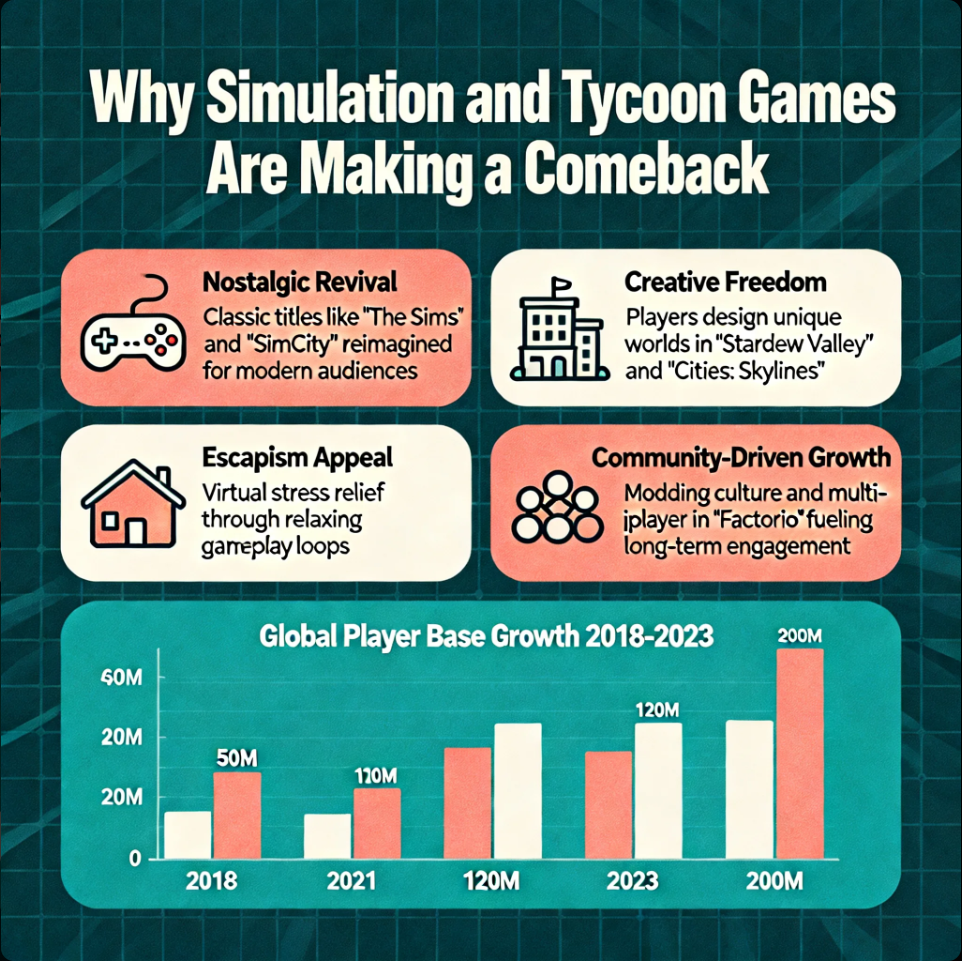
Simulation and tycoon games have always had a dedicated audience, but recently they’ve been enjoying a notable resurgence. From managing cities and businesses to building theme parks or even running farms, these games offer players a unique blend of creativity, strategy, and control. So why are simulation and tycoon games making a comeback now?
The answer lies in a mix of nostalgia, modern technology, and a growing appetite for creative gameplay.
Nostalgia Meets Modern Design
Many players grew up with classic simulation and tycoon titles, and the renewed interest reflects a desire to revisit that familiar gameplay. Modern remasters, reboots, and spiritual successors are bringing those experiences back with updated graphics and more intuitive controls.
Nostalgia provides a strong emotional pull, but modern design makes these games feel fresh and relevant.
Creativity and Player Freedom
Simulation and tycoon games give players a sandbox to create and manage systems. Unlike linear games, these genres allow players to set their own goals, experiment, and learn through trial and error.
This freedom is especially appealing to players who enjoy building, planning, and watching their creations evolve.
Relaxing Yet Rewarding Gameplay
Simulation games often offer a slower pace than action-heavy titles. This can be relaxing, yet still rewarding—especially when players see their systems grow and improve over time.
In a fast-paced world, these games provide a sense of control and calm.
Strong Community and Modding Culture
Many simulation and tycoon games support modding, allowing players to customize experiences and share creations. This community-driven content extends the lifespan of games and keeps players engaged long after launch.
Modding also encourages creativity, turning games into platforms for player innovation.
Improved Technology and Accessibility
Modern hardware and engines allow simulation games to handle larger systems, more detailed visuals, and complex mechanics. At the same time, mobile and indie platforms make it easier for developers to create simulation experiences for a wider audience.
This combination of power and accessibility is driving renewed interest.
The Appeal of Systems and Strategy
Simulation and tycoon games attract players who enjoy systems thinking. These games reward planning, optimization, and problem-solving—skills that feel satisfying and intellectually engaging.
Players are drawn to the challenge of building efficient, thriving worlds.
A Response to Competitive Gaming Culture
As competitive gaming grows, some players seek alternatives that don’t rely on fast reflexes or intense pressure. Simulation and tycoon games offer a different kind of satisfaction—one based on progress, creativity, and long-term strategy.
This shift reflects a broader trend toward more relaxed, player-driven experiences.
Why the Comeback Is Likely to Continue
With strong community support, modern technology, and a growing desire for creative gameplay, simulation and tycoon games are positioned for continued growth. These genres offer experiences that are both familiar and adaptable—making them ideal for today’s gaming landscape.