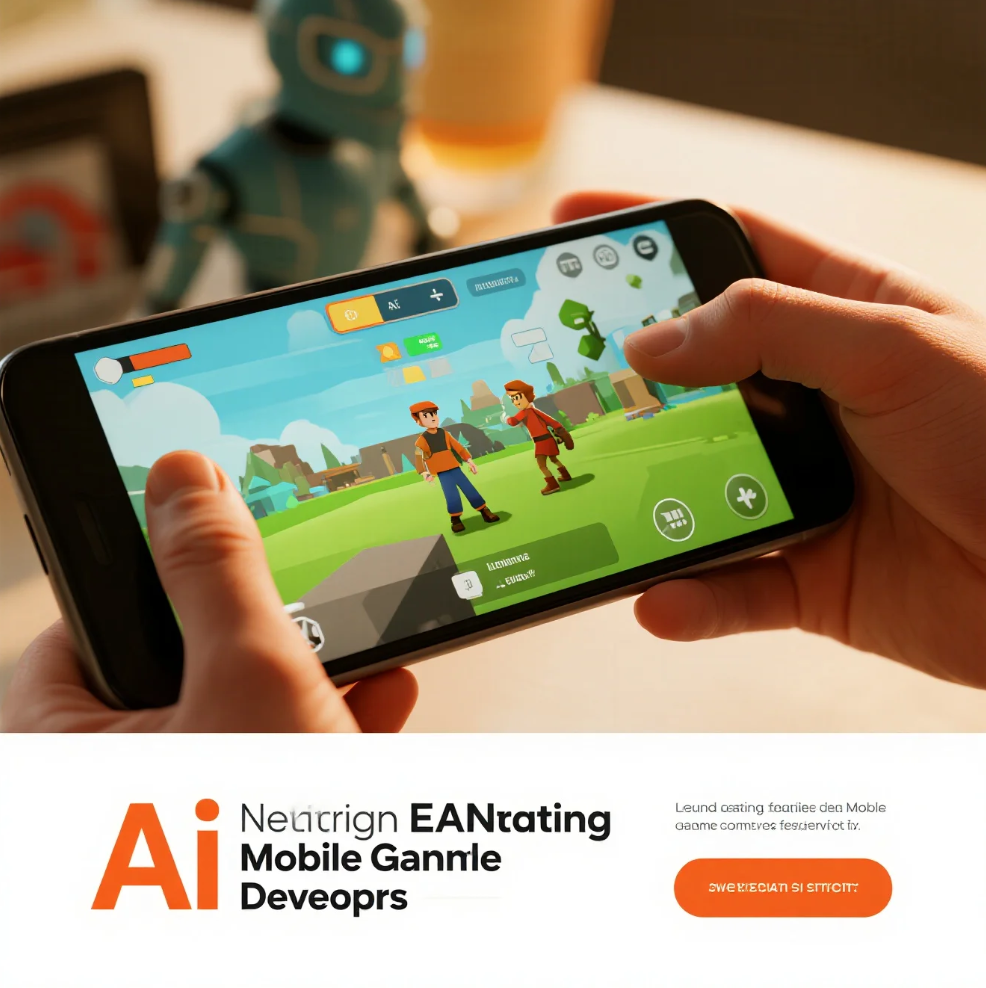
Mobile games are no longer built solely on fixed rules and scripted experiences. Today, AI and machine learning in mobile game development are transforming how games are designed, played, and evolved—making them more adaptive, personalized, and data-driven than ever before.
What was once static gameplay is now becoming intelligent and responsive.
The Shift From Static to Intelligent Games
Traditional mobile games relied on predefined mechanics: fixed difficulty curves, scripted enemies, and generic player experiences. AI and machine learning introduce systems that learn from player behavior and adapt in real time.
This shift allows games to:
- Respond dynamically to player skill
- Adjust difficulty automatically
- Deliver unique experiences to different users
In short, games are becoming smarter as players play.
Smarter Game Design With AI
Procedural Content Generation
AI enables procedural generation of:
- Levels and maps
- Quests and challenges
- Visual assets and environments
Machine learning helps ensure this content feels coherent and balanced rather than random—reducing development time while increasing replayability.
Adaptive Difficulty Balancing
One of the biggest impacts of AI and machine learning in mobile game development is dynamic difficulty adjustment.
AI systems can:
- Analyze player success and failure patterns
- Increase challenge for skilled players
- Reduce frustration for new or casual players
This keeps players engaged longer and lowers churn.
Personalization at Scale
Machine learning allows mobile games to tailor experiences to individual players.
Personalized Experiences Include:
- Custom rewards and offers
- Targeted in-game events
- Gameplay pacing matched to player behavior
Rather than one-size-fits-all design, games now evolve around the player.
👉 Learn more about personalization in digital products at
https://www.forbes.com
AI-Driven Player Analytics
Modern mobile games generate massive amounts of data. AI turns that data into insight.
Machine learning models help developers:
- Predict player churn
- Identify monetization opportunities
- Detect abnormal or fraudulent behavior
- Optimize in-game economies
This leads to better design decisions and healthier game ecosystems.
Smarter NPCs and Game Worlds
AI-powered non-player characters (NPCs) behave more realistically and less predictably.
Benefits include:
- More natural movement and decision-making
- Reactive enemy behavior
- Emergent gameplay scenarios
These improvements make mobile games feel deeper and more immersive—despite hardware limitations.
Monetization Without Breaking the Experience
AI helps balance monetization with player satisfaction.
Through behavioral analysis, developers can:
- Offer purchases at optimal moments
- Avoid aggressive or disruptive monetization
- Match offers to player preferences
This leads to higher lifetime value without sacrificing trust.
👉 Explore mobile gaming trends at
https://www.gamesindustry.biz
Faster Development and Live Optimization
AI tools also support developers behind the scenes.
Development Advantages:
- Automated testing and bug detection
- Performance optimization across devices
- Live tuning of game parameters
Machine learning allows teams to improve games after launch continuously—without major updates.
Challenges and Ethical Considerations
Despite the benefits, AI-driven game development raises important questions:
- Data privacy and consent
- Fairness in monetization algorithms
- Avoiding manipulative design practices
Responsible use of AI is essential to maintain player trust and long-term success.
👉 Read about ethical AI practices at
https://www.weforum.org
The Future of Mobile Game Development
As AI technology advances, future mobile games may feature:
- Fully adaptive storylines
- AI-generated characters and dialogue
- Predictive content delivery
- Seamless cross-platform intelligence
AI and machine learning in mobile game development are not just enhancements—they’re becoming foundational.
Final Thoughts
AI and machine learning are redefining mobile game development by making games more responsive, personalized, and sustainable. For developers, this means smarter tools and deeper insight. For players, it means richer, more engaging experiences.
The future of mobile gaming isn’t just interactive—it’s intelligent.