In just over a decade, smartphones have gone from communication tools to the dominant platform for gaming worldwide. Today, mobile gaming accounts for more than half of the global gaming market, surpassing traditional consoles and PC platforms. But how did this transformation happen?
The rise of smartphones as gaming devices is a story of technology, accessibility, and changing player habits.
Early Mobile Gaming: Simple Beginnings
Mobile gaming began modestly with pre-installed games like Snake on Nokia phones in the late 1990s. These games were simple but addictive:
- Minimal graphics and controls
- Short play sessions
- Universal accessibility
These early experiences introduced millions to gaming outside traditional consoles.
The Smartphone Revolution
The launch of the iPhone in 2007 and Android devices soon after changed mobile gaming forever:
- Touchscreen interfaces allowed intuitive controls
- App stores created a centralized distribution platform
- Developers could reach millions instantly
Games like Angry Birds, Candy Crush, and Clash of Clans became cultural phenomena, demonstrating that mobile could rival console experiences in engagement and revenue.
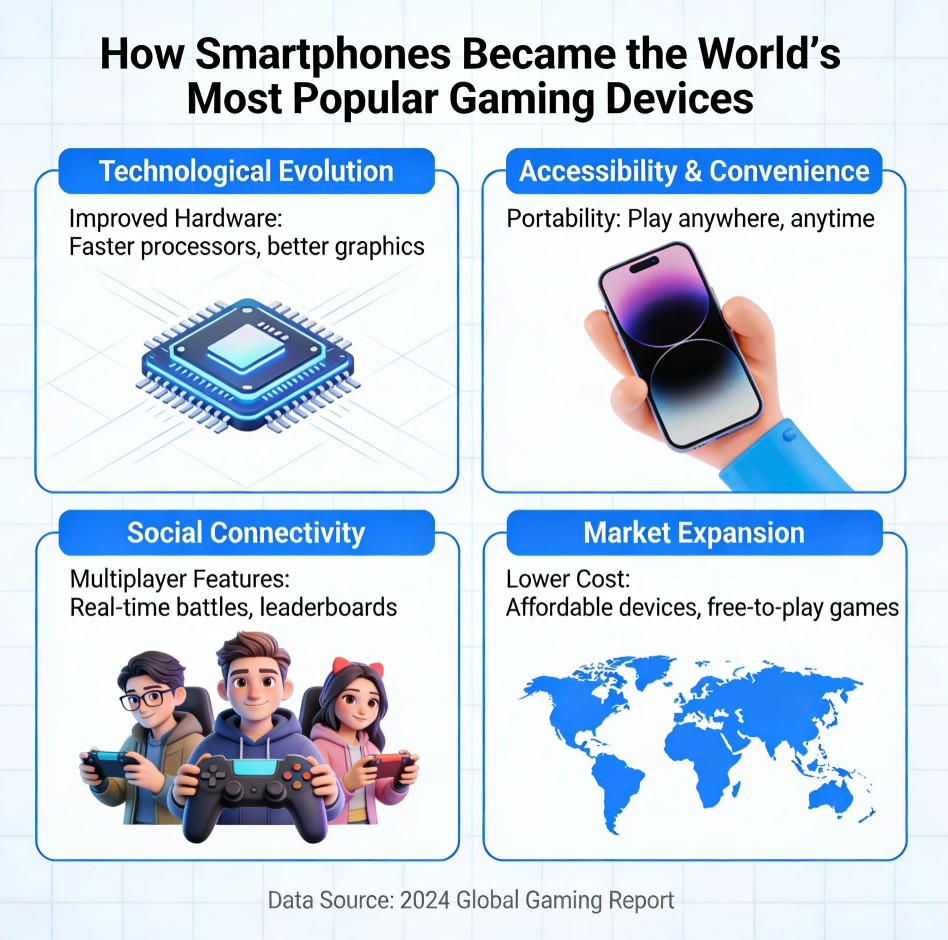
Accessibility and Convenience
One key reason smartphones dominate gaming is accessibility:
- Always-on devices
- Portable and lightweight
- No need for additional hardware
- Free-to-play models with microtransactions
Players can enjoy gaming anywhere, anytime, making smartphones uniquely suited to modern lifestyles.
Social and Connected Gaming
Smartphones also enabled social gaming, connecting friends and strangers worldwide:
- Multiplayer and cooperative experiences
- Social media integration
- Online leaderboards and events
This social dimension transformed gaming from a solitary hobby to a shared global experience.
The Role of Casual Gaming
Casual games are particularly effective on smartphones:
- Easy to learn, hard to master
- Short sessions suitable for commuting or breaks
- Gamified experiences that reward daily engagement
This approach appeals to a broad demographic, from teens to adults, making smartphones the most inclusive gaming platform.
Mobile Technology Driving Innovation
Advancements in hardware and software further solidified mobile gaming dominance:
- High-resolution displays and touch sensitivity
- Powerful processors enabling 3D and AR experiences
- Cloud gaming platforms bringing console-level graphics to mobile
Mobile devices now support games once exclusive to PCs and consoles.
Final Thoughts: Why Smartphones Won
Smartphones became the world’s most popular gaming devices by combining convenience, connectivity, and innovation. They broke down barriers, inviting casual players, social gamers, and hardcore enthusiasts alike.
As technology continues to evolve—through AR, VR, and cloud streaming—mobile gaming is set to remain the central hub of global gaming culture.